The Subtext: CMS Rebuild & Submission Automation
Rebuilt the CMS architecture from scratch, migrated and cleaned all legacy content, and designed an automated article submission system that cut weekly editorial overhead by hours.
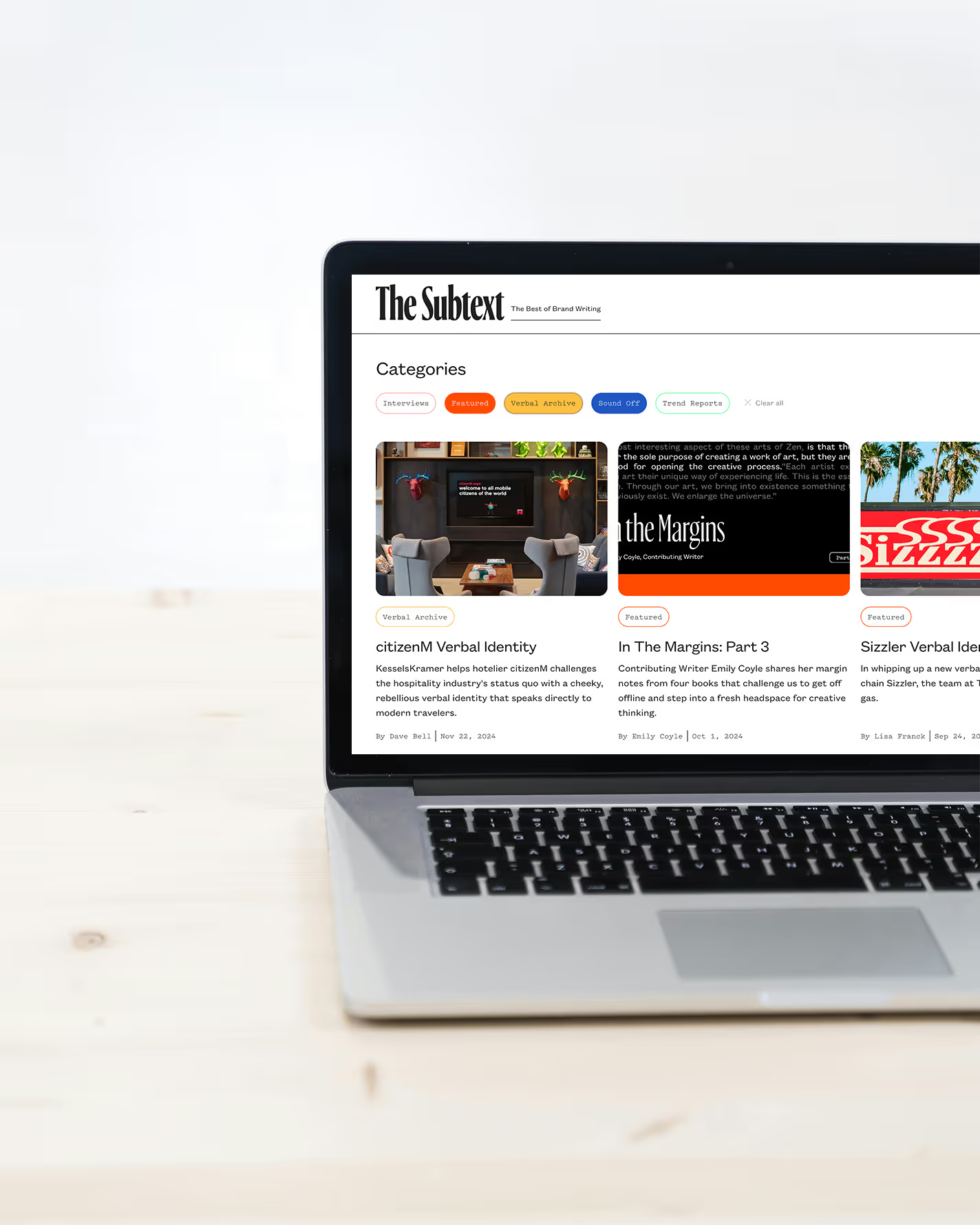
The Challenge
The Subtext is an editorial blog that came to me with a straightforward request: redesign the site to match their designer's mockups. But once I dug into the existing setup, the real problems surfaced. The CMS had no scalable structure. Content types were flat, data relationships were missing, and there was zero SEO foundation: no meta descriptions, no proper slugs, no semantic page titles.
On top of that, article submissions were handled entirely over email. Authors would send drafts back and forth with the editorial team, sometimes over weeks, with no standardized format and no central place to track status. It was eating hours every week.
What I Proposed
I scoped the project well beyond a visual redesign. I proposed a full CMS architecture rebuild: new content types, structured data relationships, a complete data cleanup from the legacy site, and SEO optimization across every page. The goal was a system the editorial team could run independently, without developer involvement for routine publishing.
I also flagged the submission workflow as a major bottleneck and designed an automated pipeline to replace the email chaos.
CMS & Redesign Implementation
I rebuilt the CMS from scratch in Webflow: defined new content types, structured all data relationships, and migrated every piece of legacy content after a thorough cleanup. Then I implemented the visual redesign on top of the new CMS, so the design and the data layer worked together from day one. The editorial team can now create, edit, and publish articles without touching any code.
Automated Submission System
I designed and built an end-to-end submission pipeline that replaced the email back-and-forth entirely:
- A standardized Google Docs template that every author must use to submit, enforcing a consistent format across all submissions
- All submissions are logged automatically in an Airtable workspace
- New authors are detected and flagged; returning authors are matched to their existing records
- An automated email notification goes to the editorial team with all the key details: author info, submission metadata, and a direct link to the article in Google Docs
- The team reviews and updates the status directly in Airtable
- On acceptance, the content is pushed to the Webflow CMS. If the author is new, their profile is automatically created in Webflow to keep the system in sync
The result: hours of weekly email overhead eliminated, a single source of truth for all submissions, and a clear, trackable workflow from draft to published article.